
Underground Feeds That Eliminate Overhead Clutter
Street Light Conduit Installation in Tyler for lighting electrical feeds bored beneath city corridors and commercial districts
Overhead street light wiring creates visual clutter and maintenance complications in Tyler's municipal corridors and commercial zones, where underground conduit systems improve aesthetics and reduce storm-related outages. Directional boring places conduit from transformer locations or main service panels to individual light pole bases without trenching across sidewalks, parking lots, or landscaped medians. Knuckles Boring ETX installs these conduit pathways for city projects and private developments throughout Tyler, with conduit sized to accommodate lighting circuits and future expansion as pole counts increase or LED retrofits require additional control wiring.
The bore originates at the electrical source and extends to each pole location along the planned route, with conduit pulled through the completed bore path and terminated at junction boxes or pole base hand holes. This eliminates the need for pole-mounted transformers and overhead wire spans that complicate maintenance and create failure points during ice storms and high winds common in East Texas. Circuit paths are mapped and documented for future troubleshooting and expansion projects.
Request a detailed estimate based on pole count, circuit layout, and conduit routing requirements for your lighting project.
What Changes After Conduit Installation Completes
Conduit installation involves boring shallow pathways that avoid root zones and existing utilities while maintaining proper depth for frost protection and mechanical safety. Conduit diameter typically ranges from one and a half inches to two inches for standard street lighting circuits, with larger sizes used when multiple circuits share a common pathway or future pole additions are anticipated. Pull ropes are left in place to assist electricians with wire installation after conduit placement finishes.
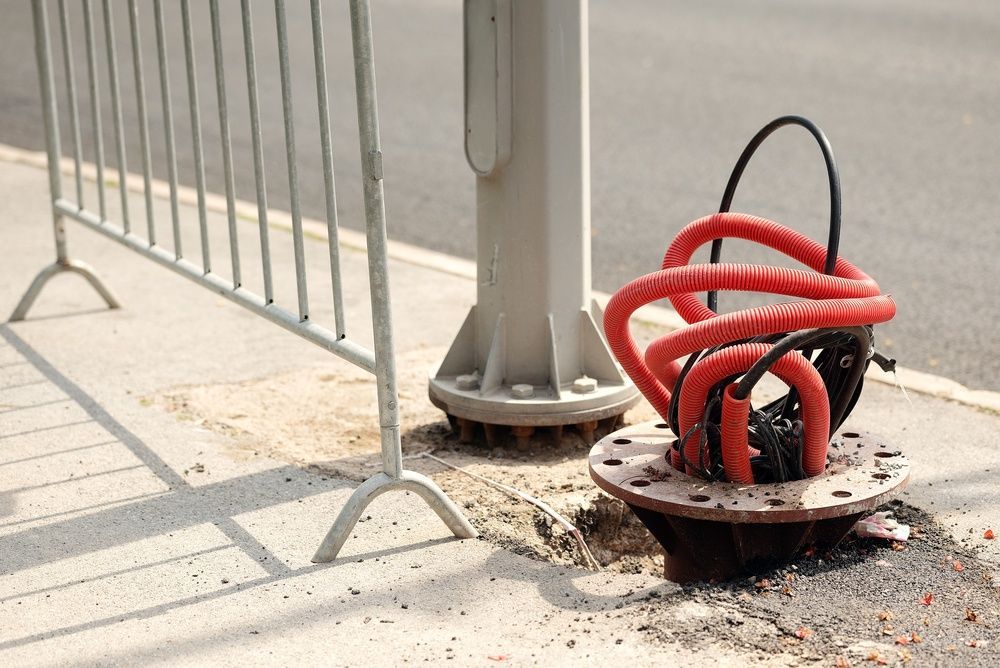
After the system is energized, street lights operate without visible overhead wiring, and pole bases house the only above-ground connection points for maintenance access. Storm damage no longer interrupts lighting circuits through downed wire spans, and landscaping activities proceed without concern for overhead clearance or accidental contact. Each pole connects to the underground circuit through a sealed hand hole that protects splices and junction points from moisture and soil intrusion.
Conduit pathways follow curb lines or median edges to simplify future locate requests and prevent conflicts with tree planting, irrigation installation, or pavement maintenance. Bore entry and exit points are positioned to minimize surface restoration, and conduit ends are marked for electricians who complete the wire pulling and termination work according to National Electrical Code standards for outdoor lighting circuits.
Common Questions About This Service
Street light conduit projects in Tyler raise questions about circuit capacity, bore depth, and coordination with electrical contractors during wire installation.
What depth is required for street light conduit boring?
Conduit typically runs eighteen to thirty inches deep to avoid surface equipment and provide protection from accidental dig-ins, with depth adjusted for frost line considerations and local code requirements in Tyler municipal zones.
How does boring accommodate multiple light poles in one run?
A continuous conduit bore connects each pole location in sequence, with stub-ups or junction boxes installed at each pole base to allow circuit taps without interrupting the main conduit pathway to downstream poles.
When should conduit installation occur during site development?
Boring is scheduled after rough grading and utility coordination but before final paving and landscaping, allowing conduit placement to align with electrical rough-in schedules and avoid rework if surface changes occur later in construction.
What conduit material is used for street lighting circuits?
High-density polyethylene or PVC conduit is standard for lighting applications, selected based on soil conditions and electrical code requirements—rigid materials handle shallow burial depths where surface loads are minimal, while flexible conduit accommodates slight alignment adjustments during installation.
How are conduit pathways marked for future reference?
Tracer wire is installed alongside conduit runs to allow electronic locating without excavation, and as-built drawings document bore paths, pole connections, and junction box locations for maintenance crews and future expansion planning.
Knuckles Boring ETX coordinates conduit installation timing with electrical contractors and municipal project schedules to align wire pulling and light pole placement throughout Tyler. Schedule a property evaluation to identify routing options and conduit specifications for your street lighting infrastructure.