Infrastructure Routed Without Surface Excavation
Horizontal Directional Drilling in Tyler for utility crossings beneath roadways and existing infrastructure
Replacing damaged utility lines, repairing conduits choked by invasive tree roots, or bypassing pipes cut during third-party construction calls for a clean solution that avoids tearing up roads, driveways, or landscaping. Knuckles Boring ETX provides horizontal directional drilling for underground infrastructure projects across East Texas where conventional trenching causes major surface disruption. East Texas utility projects benefit from trenchless installations that resolve critical line failures—including replacing collapsed thin-wall sleeves—without the expensive pavement restoration and ground settling caused by open excavation.
Our trenchless process easily handles new construction utility setups—including gas, power, water, irrigation, and fiber—as well as property additions that require running electrical outlets, lights, water, security cameras, or internet out to a detached shop, barn, or external building. The completed bore path creates a stable underground route that protects your conduits and utility lines from surface loading and environmental hazards throughout decades of reliable service.
Request an on-site evaluation to determine bore length, depth requirements, and soil conditions for your utility installation project.
How Steerable Drill Heads Maintain Bore Path Accuracy
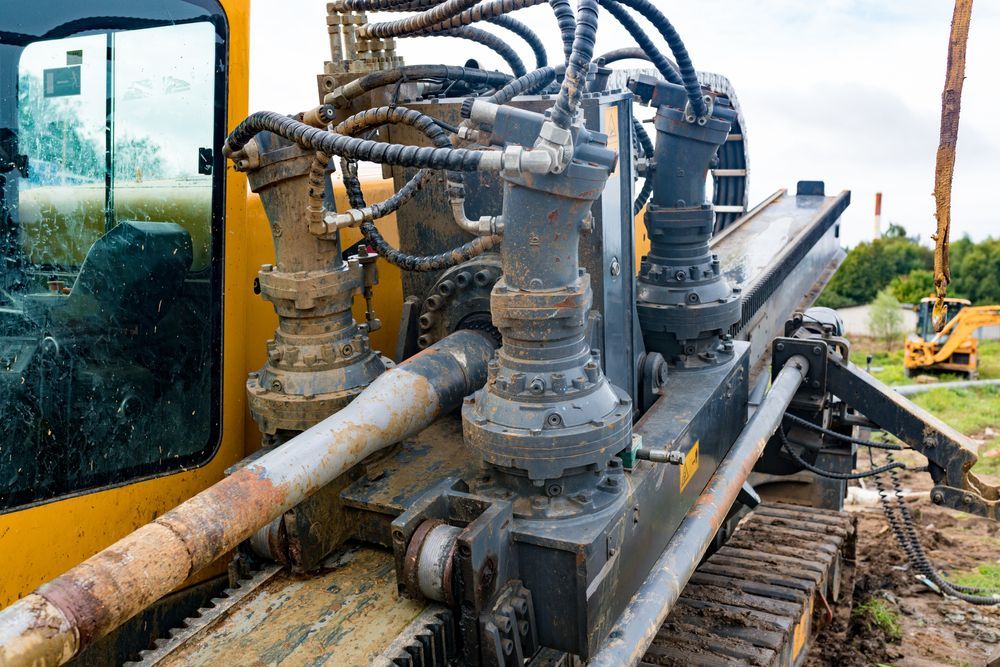
The drill head transmits position data to a locating receiver above ground, allowing the operator to adjust steering angle in real time as the bore advances. You see entry and exit pits sized only for equipment access rather than continuous trench excavation across the entire route. East Texas projects in the Tyler metro area often cross under state highways, railroad corridors, or commercial parking areas where surface disruption would halt traffic or require costly pavement restoration.
Once the bore completes, the surface above remains intact except at entry and exit points. Pavement, landscaping, and hardscapes between those locations stay undisturbed, and the installed utility runs in a protective bore path sized to accommodate thermal expansion and future access if needed. Knuckles Boring ETX sizes each bore diameter based on pipe specifications, installation depth, and soil bearing capacity along the route.
Bore paths accommodate multiple conduits in a single run when planned during the initial pilot phase, and alignment surveys confirm depth and grade before the utility line is pulled into place. Directional control becomes critical when bores exceed three hundred feet or navigate around underground obstructions identified during pre-bore utility locates.
What Property Owners Ask About Directional Boring
Projects across Tyler and surrounding East Texas locations involve varied soil conditions and crossing distances, so questions about bore planning and site requirements come up frequently before work begins.
What determines the maximum length of a directional bore?
Soil type, bore diameter, and drill rig capacity set practical limits; most residential and light commercial bores in Tyler run between one hundred and six hundred feet, while infrastructure-scale projects may extend beyond a thousand feet with larger equipment and multi-stage reaming passes.
How does the drill operator know the bore path stays on grade and alignment?
The drill head contains a transmitter that sends depth, pitch, and direction data to a walkover locating system above ground; the operator adjusts steering based on real-time position feedback throughout the bore.
When is horizontal directional drilling more cost-effective than open trenching?
When the crossing involves paved surfaces, active roadways, landscaped areas, or obstacles like rivers and rail lines where trenching would require permits, traffic control, and expensive surface restoration after backfill.
What site preparation does a bore project require before drilling starts?
Entry and exit pit excavation to expose the bore start and end points, utility locates to map existing underground services, and clear access corridors for the drill rig and support equipment.
How long does a typical directional bore take from setup to completion?
Bore duration depends on distance, diameter, and soil conditions; a straightforward three-hundred-foot residential bore may finish in one day, while longer infrastructure crossings with multiple reaming passes can require several days of drilling and pullback operations.
Knuckles Boring ETX handles infrastructure-scale directional drilling for municipal, commercial, and utility projects where subsurface installation protects long-term system integrity. Schedule a project consultation to review bore routing, depth requirements, and site-specific soil conditions in the Tyler service area.