
Utility Crossings That Keep Traffic Moving
Median Boring in Tyler for trenchless utility installation beneath road medians without lane closures or traffic interruption
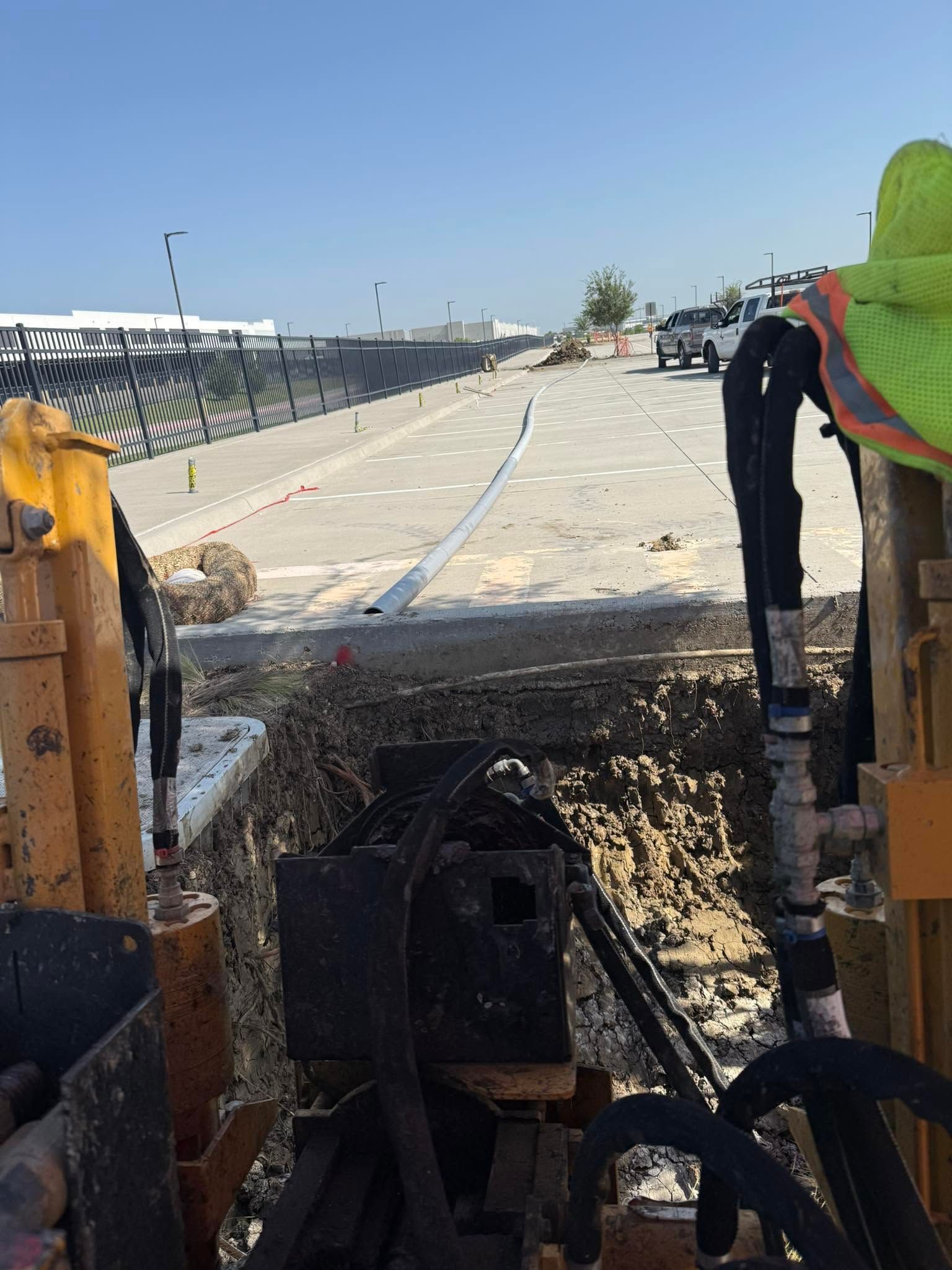
Road median crossings for electrical, telecom, and water utilities traditionally required lane closures, traffic control, and extensive surface restoration that disrupted travel and increased project costs. Directional boring eliminates these complications by drilling beneath median barriers and roadway surfaces to install conduit or sleeves for utility lines, with entry and exit pits positioned outside travel lanes to maintain normal traffic flow throughout installation. Knuckles Boring ETX completes median boring projects across Tyler's municipal streets and county road corridors, using precision equipment designed for confined median spaces where drilling accuracy prevents pavement damage and utility conflicts in heavily developed rights-of-way.
The bore originates on one side of the median and exits on the opposite side or at a designated endpoint, following a shallow pathway beneath the median structure and roadway surface. Drill steering adjusts continuously to avoid existing utilities and maintain clearance from storm drainage, curb foundations, and underground obstructions common in established corridors. Conduit is pulled through the completed bore and left accessible for utility crews to install cable or pipe without additional excavation.
Request a consultation to review crossing specifications and bore alignment for your median utility project.
What Proper Median Boring Requires
Median boring depths typically range from three to six feet depending on roadway classification and median width, with shallower bores used for narrow medians and deeper installations required where surface loads or existing utilities demand greater clearance. The drill head diameter is matched to conduit size, and bore fluid pressure is monitored to prevent surface heaving or fluid loss that indicates shallow depth or unintended voids. Entry and exit pits are sized to accommodate drilling equipment and conduit handling without extending into traffic lanes or shoulder areas.
After boring completes, conduit ends remain accessible at pit locations for utility installation crews, with the roadway surface and median barrier showing no trenching or saw cuts. Traffic continues without detours or delays, and pavement integrity remains intact across the entire crossing zone. Utility lines installed through the conduit operate beneath the road structure with protection from surface loads and environmental exposure, simplifying future maintenance compared to directly buried lines vulnerable to surface excavation during road repairs.
Bore alignment is documented with as-built drawings that record depth, horizontal offset from median centerline, and conduit termination points for future reference during utility expansion or road reconstruction projects. Bore length depends on median width and roadway cross-section, with most crossings ranging from twenty to sixty feet for typical divided highways and commercial corridors throughout Tyler and East Texas municipalities.
What Property Owners Usually Ask
Median boring projects raise questions about permitting, bore accuracy, and coordination with transportation authorities during utility installation in active roadways.
What permits are required for median boring in Tyler?
Municipal or county right-of-way permits are necessary before boring begins, with applications submitted by the utility provider or project contractor to ensure work complies with transportation department standards and traffic management requirements.
How does boring avoid damaging the median structure?
Drill depth is maintained below the median foundation and curb base, with locating equipment tracking drill head position to prevent contact with concrete barriers, drainage structures, or irrigation lines installed within the median footprint.
When is median boring preferred over open-cut trenching?
Boring is specified when traffic control costs, lane closure restrictions, or pavement warranty conditions make trenching impractical—most Tyler infrastructure projects default to boring for median crossings to avoid travel disruption and minimize restoration expenses that exceed boring costs.
What utility types use median boring installations?
Electrical conduit for traffic signals and street lighting, telecom fiber for intersection connectivity, and water service lines for median irrigation systems all cross roadways through bored conduit pathways that eliminate surface excavation and long-term pavement settlement issues.
How is bore accuracy maintained in confined median spaces?
Precision drilling equipment and real-time locating systems allow steering adjustments within inches during the bore, with experienced operators compensating for soil resistance and drill torque variations that affect alignment in East Texas clay and compacted roadway base materials.
Knuckles Boring ETX coordinates permit applications and utility design compliance for median crossing projects throughout Tyler's street and highway corridors. Schedule a property evaluation to determine bore routing, conduit sizing, and installation timing for your median utility crossing.